How to Store Cryptocurrency Safely

Cryptocurrency puts you in direct control of your money — and makes you directly responsible for keeping it safe. Access to blockchain assets is controlled by private keys, so protecting those keys is the heart of crypto security. This guide walks through the main storage options and the everyday habits that keep digital assets out of a thief’s reach.
Why Safe Cryptocurrency Storage Matters
Unlike a bank account, there is no central authority that can restore access to a self-custodied wallet. If your private keys are lost or stolen, your assets can become permanently inaccessible. Phishing pages, malware that targets private keys, social engineering, and exchange platform vulnerabilities are all common threats, which is why Kraken notes that keeping seed phrases and private keys secure is essential for accessing and recovering cryptocurrency safely.
Hot Wallets vs. Cold Storage
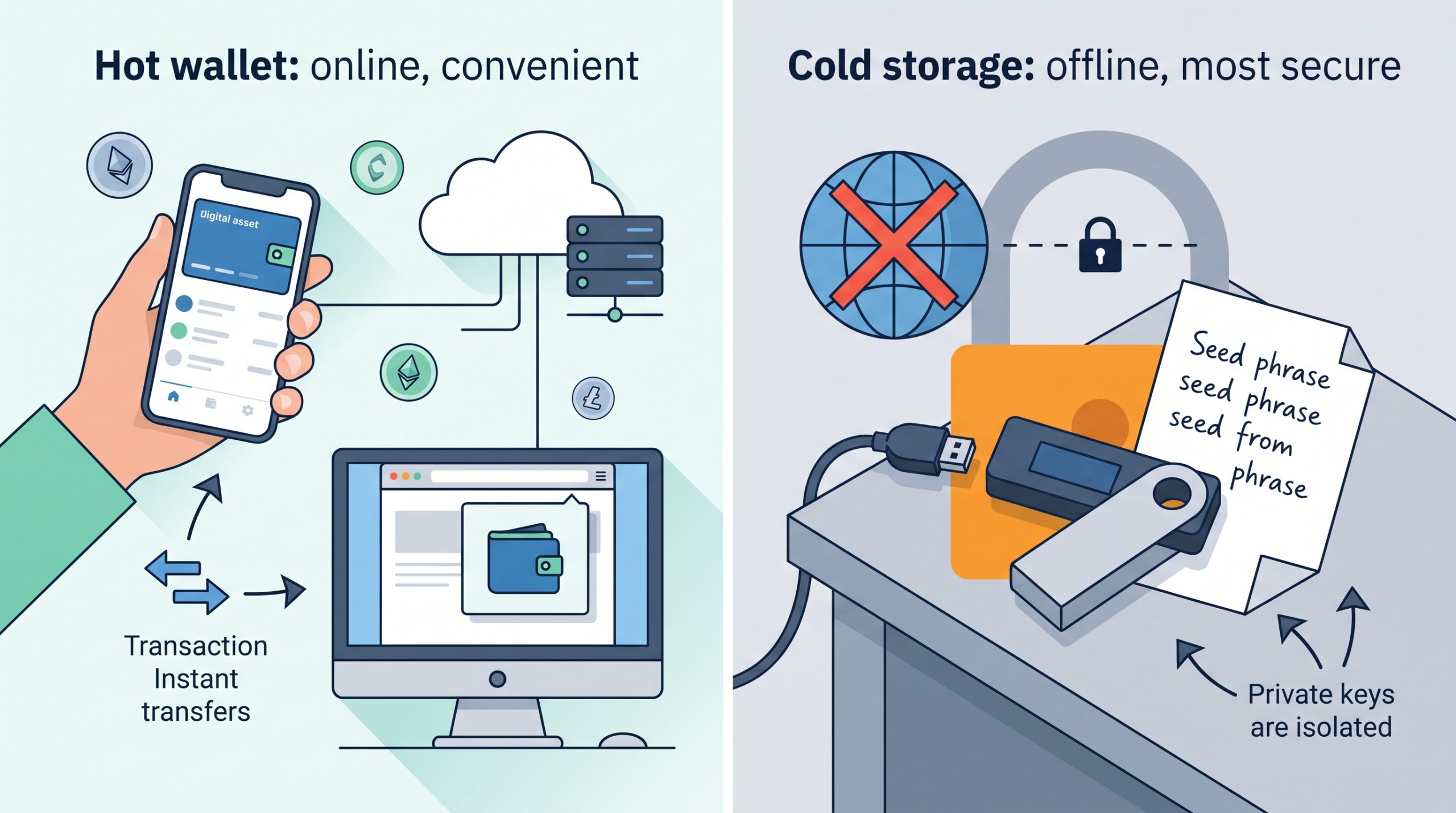
Hot wallets — web, mobile, and desktop wallets that stay connected to the internet — are convenient for frequent transactions, but that connection is also their weakness. Cold storage keeps keys entirely offline. Investopedia describes cold storage as one of the safest methods for holding bitcoin because offline wallets are not accessible via the internet, and says the safest storage is a non-custodial cold hardware wallet. Binance Academy agrees that the most secure option is cold storage: a hardware wallet that keeps your keys offline, making them inaccessible to remote attackers. Hardware wallets such as Ledger and Trezor store private keys in a secure chip and require physical confirmation for transactions. For funds you do not plan to touch for a while, Experian recommends keeping long-term holdings in cold storage.
Custodial vs. Non-Custodial Wallets
A custodial wallet means someone else — usually an exchange — holds the keys on your behalf. Binance Academy advises that if you want full control of your funds, you should move them to a non-custodial crypto wallet where you hold your own private key. Control comes with responsibility: once you self-custody, backing up your keys is entirely up to you.
How to Set Up a Hardware Wallet
Investopedia outlines a straightforward setup process for moving crypto into cold storage:
- Purchase a reputable hardware wallet.
- Install the corresponding software.
- Record the recovery (seed) phrase and store it securely.
- Transfer cryptocurrency to the wallet address generated by the device.
Protecting Your Seed Phrase
Your seed phrase can restore your wallet — which means anyone who obtains it can take everything. Crypto.com recommends storing your seed phrase and private key offline and never sharing them. Experian likewise warns never to share your seed phrase and not to store it on a device or cloud backup service that is usually connected to the internet. Security.org suggests writing seed words down on paper and storing them safely. Durable options include metal backup plates, fireproof safes, and bank safety deposit boxes, ideally with copies kept in separate physical locations.
Everyday Security Habits
Strong storage is only part of the picture. These routine practices close off the most common attack paths:
- Use a unique, strong password for each crypto platform, and never reuse credentials.
- Enable two-factor authentication (2FA) on wallets and exchanges.
- Verify URLs manually before entering credentials; Experian also advises double-checking a website’s URL before connecting your wallet or downloading software.
- Review active sessions and connected devices regularly.
- Avoid public Wi-Fi when accessing wallets or exchanges; Security.org adds that if public Wi-Fi is unavoidable, use a VPN.
- Check smart-contract approvals and revoke those you no longer need.
- Keep wallet software updated and download it only from official sources.
Should You Keep Crypto on an Exchange?
Exchange wallets are convenient but are prime targets for hackers, and you do not control the keys. Security.org advises keeping cryptocurrency on an exchange only if you are trading it actively, and otherwise transferring it to an external wallet. A common approach is to keep a small spending balance in a hot wallet and move the rest into cold storage.
Frequently Asked Questions
What is the safest way to store Bitcoin?
A non-custodial cold hardware wallet is described by Investopedia as the safest storage, because the keys never touch the internet. Combine it with securely stored offline seed phrase backups.
Can I lose my cryptocurrency permanently?
Yes. Losing your private keys or seed phrase without a backup, falling for a phishing scam, or sending funds to a wrong address can all make assets unrecoverable. Careful backups stored in multiple secure locations are the best prevention.
How do I protect my seed phrase?
Write it down on paper or metal, keep it offline in secure, physically separate locations, never photograph or upload it, and never share it with anyone.
Security is an ongoing process, not a single setup step. Choose cold storage for what you want to keep, guard your seed phrase offline, and make the habits above part of your routine.